

Electromagnetic Hypersensitivity: Is EHS Real? EMF Symptoms
Posted by eWater.com on Oct 1st 2026
Your head aches after a long day at the laptop. You sleep badly in a room with the router down the hall. Your skin tingles, your ears ring, and your focus slips away by mid-afternoon. Some people connect symptoms like these to the phones, WiFi and towers around them, and the name they find for it is electromagnetic hypersensitivity. This guide covers what electromagnetic hypersensitivity is, the symptoms people report, what the science does and does not say, and practical steps you can take today.
What Is Electromagnetic Hypersensitivity?
Electromagnetic hypersensitivity, usually shortened to EHS, is the name for a set of symptoms that people link to electromagnetic exposure. You may also see it called electrosensitivity, EMF sensitivity, or in medical papers, idiopathic environmental intolerance attributed to electromagnetic fields.
People with EHS most often point to cell phones, cell towers, WiFi routers, Bluetooth, smart meters, power lines and household wiring as their triggers.
EMF and EMR: Two Kinds of Exposure
It helps to separate two terms that are often used as if they meant the same thing.
- EMF (electromagnetic frequencies) is the whole field around you: WiFi, cell towers, 5G, smart meters, wiring and appliances. It fills the room whether you are using a device or not.
- EMR (electromagnetic radiation) is the part aimed straight into your body: the heat and radiation from the phone against your ear or in your pocket, and the laptop resting on your lap.
They travel together. Anyone who feels sensitive is living inside the first and holding the second, which is why it makes sense to think about both.
EMF Exposure Symptoms People Report
Symptoms vary from person to person, and they often come and go. The ones reported most often include:
- Headaches
- Fatigue and low energy
- Trouble sleeping
- Poor concentration and memory lapses
- Tingling, burning or redness of the skin
- Ringing in the ears
- Dizziness or nausea
- A racing heart or palpitations
- Anxiety, irritability and muscle aches
None of these is unique to EHS. Each one has many possible causes, which is part of why the condition is so hard to pin down.
Is EHS Real?
This is the question most people are really asking, and the honest answer has two parts.
It is not a recognized medical diagnosis. The World Health Organization states that "EHS is not a medical diagnosis, nor is it clear that it represents a single medical problem." There is no lab test for it, and in blinded studies people who report EHS have generally not been able to tell when a field was switched on or off. Many researchers point to stress, anxiety and the expectation of harm as part of the picture.
The symptoms are real. The same WHO page is just as clear on this: "The symptoms are certainly real and can vary widely in their severity. Whatever its cause, EHS can be a disabling problem for the affected individual." Nobody should be told they are imagining it.
So is electrosensitivity real? The suffering is. What the science has not settled is the cause. You can hold both of those at once, and that is a better starting point than either "it is all in your head" or "it is proven."
See a Doctor First
Because every EHS symptom has other possible causes, start with your doctor. Headaches, fatigue, poor sleep, palpitations and dizziness can come from thyroid problems, anemia, sleep apnea, migraine, blood pressure changes, anxiety and more. Many of these are very treatable. Ruling them out is the most important step you can take, and it does not stop you from making changes at home as well.
Practical Steps for EMF Sensitivity
Whatever the cause of your symptoms, many people feel better when they take some control over their surroundings. None of this is a treatment, and none of it replaces medical care. It is everyday common sense.
1. Make the bedroom your quiet room
Charge your phone in another room, or at least across the room from your bed. Turn off the router at night if you can. Sleep is where many people notice the biggest difference in how they feel.
2. Add distance
Use speakerphone or wired earbuds for long calls. Keep the phone out of your pocket when you do not need it, and put the laptop on a desk instead of your lap. Distance costs nothing and cuts the EMR aimed straight at your body.
3. Take screen breaks
Step away from devices during the day and get outside. Fresh air, daylight and movement help with stress, sleep and focus, whatever else is going on.
4. Look after the basics
Good hydration, regular meals, less caffeine late in the day and a steady bedtime all make the body more resilient to stress of any kind.
5. Carry personal protection
You cannot turn off the cell tower down the street, the neighbor's WiFi or the smart meter on the wall. That is the EMF field, and it follows you everywhere. Our personal protection range is built for this. It goes where you go, needs no batteries or charging, and leaves your phone and WiFi working exactly as they do now.
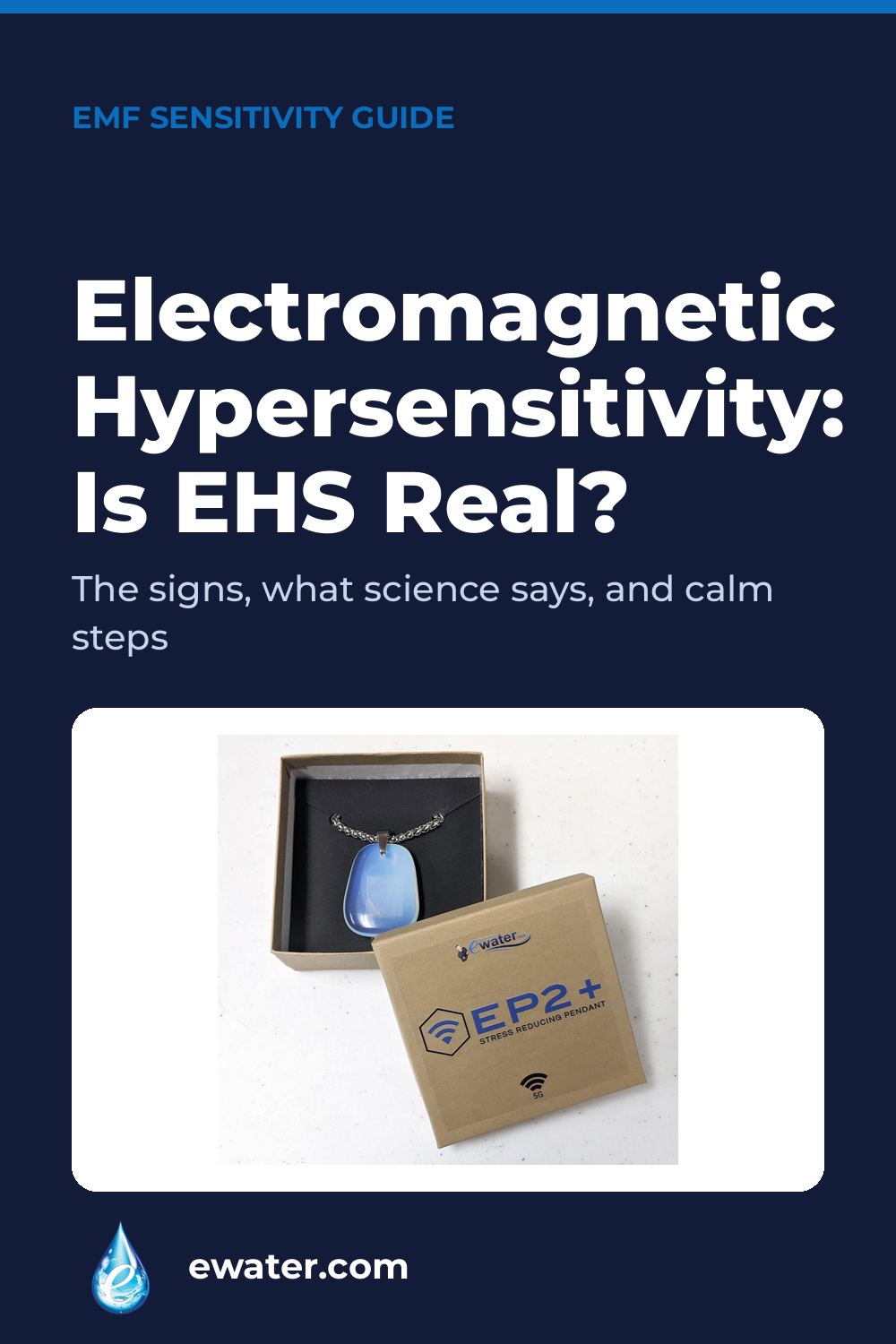
For the field around you, the EP2 Plus Stress Reducing Pendant turns chaotic EMF into energy your body can process without a stress response. It does not interfere with any device. Wear it, carry it or place it on your nightstand, and it is backed by a money back guarantee.
For the EMR from the phone you hold every day, the same Personal Protection category has options made for the device itself. Many people choose one for the field and one for the phone, since those are two different kinds of exposure.
Frequently Asked Questions
What is electromagnetic hypersensitivity?
It is the name for symptoms such as headaches, fatigue, poor sleep and skin tingling that people link to phones, WiFi, towers and other electromagnetic sources. It is also called EHS or electrosensitivity.
Is EHS a real medical condition?
It is not a recognized medical diagnosis, and there is no test for it. The World Health Organization also says the symptoms are real and can be disabling, so they deserve to be taken seriously.
What are the symptoms of EMF sensitivity?
The most common are headaches, fatigue, trouble sleeping, poor concentration, tingling or burning skin, ringing in the ears, dizziness and a racing heart.
How do I know if I am sensitive to EMF?
There is no test that confirms it. See your doctor to rule out other causes, then notice whether your symptoms change when you make simple changes, such as keeping devices out of the bedroom.
What is the difference between EMF and EMR?
EMF is the whole field around you, from WiFi, towers, 5G, meters, wiring and appliances. EMR is the heat and radiation aimed into your body from the phone and laptop you hold.
Can I reduce EMF exposure without giving up my phone?
Yes. Add distance, keep devices out of the bedroom, and carry personal protection that works alongside your devices rather than interfering with them.